By Futuru C.L. Tsai
Director, National Museum of Prehistory, Taiwan
Professor, Ph.D. Program in Austronesian Studies, National Taitung University
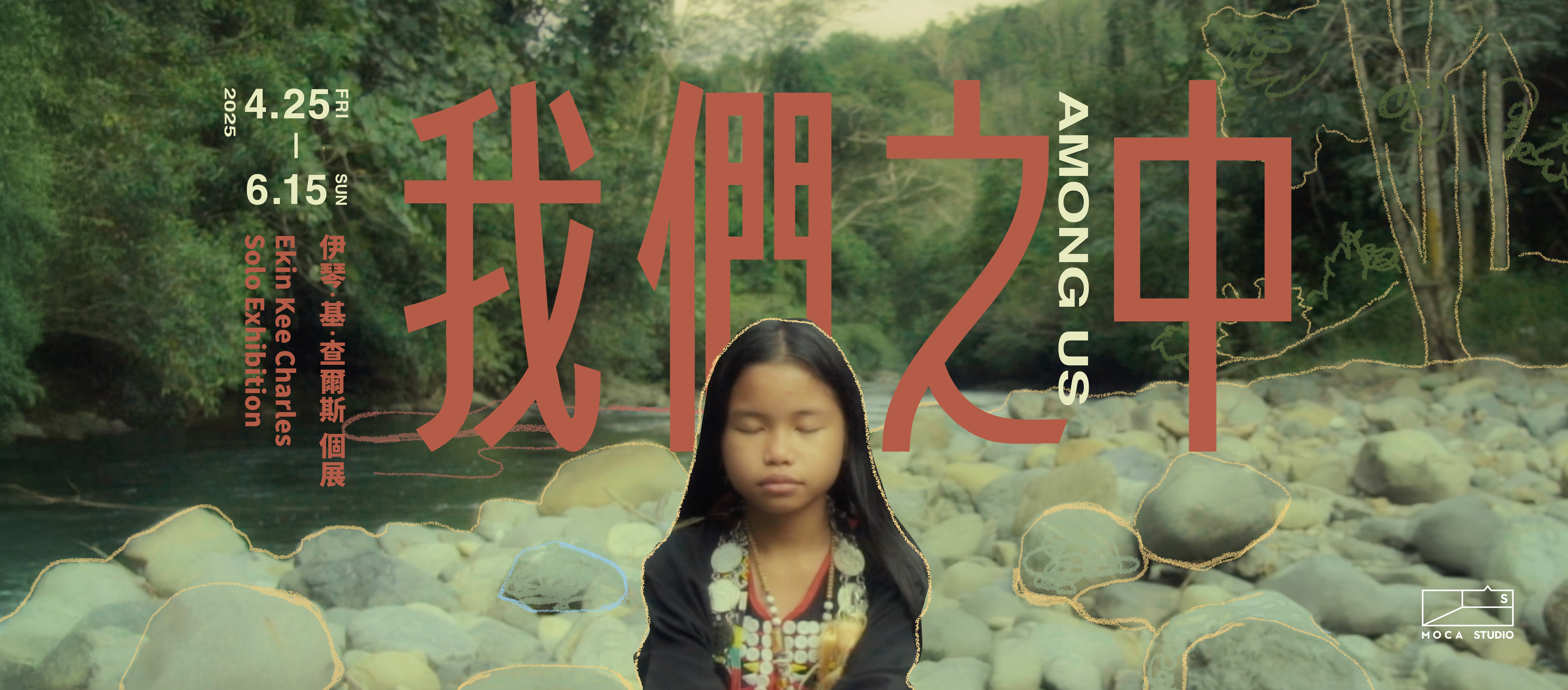
Ekin Kee Charles, an indigenous filmmaker of Kimaragang descent from Malaysia, has showcased two short films at the Museum of Contemporary Art, Taipei (MoCA TAIPEI): Meet Us at the Ridge: 6.0753° N, 116.5588° E (2024/8 minutes) and Rama Rama (2021/16 minutes). The narrative and cinematic language of these two films employ a style that is both poetic and grounded in the everyday. They gently yet profoundly reflect on her community’s oscillation between tradition and modernity, forming a kind of “cultural activism” that, while sharing commonalities with many other Indigenous films, remains distinct in its expression.
Faye Ginsburg, an anthropologist at New York University, proposed that indigenous media functions as a form of cultural activism. She observed that indigenous and marginalized communities employ media, art, and cultural practices to interpret, reconstruct, and preserve their cultures, serving as a resistance to oppression or assimilation by the dominant society. While Ekin Kee Charles’s two films, like many indigenous works, interpret her native culture through the art of cinema, they differ from traditional indigenous media that emphasize cultural activism. Rather than overtly opposing the dominance of mainstream society, these works dwell more deeply in the director’s inner reflection, allowing the wounds of her culture to speak through poetic imagery and narrative.
Ekin’s exploration of her cultural activism through film stands apart from the works of many Taiwanese indigenous directors. Taiwanese anthropologist Hu Tai-Li (胡台麗), who examined films by these directors presented at the Taiwan International Ethnographic Film Festival between 2001 and 2019, pointed out that most of their works focused on exposing mainstream stereotypes and misconceptions about indigenous peoples while downplaying conflicts and vulnerabilities within indigenous communities to foster a positive public image. Such a distinction may arise from differing social contexts: Sabah, as part of Malaysia, has a highly diverse ethnic population, with over thirty indigenous groups forming the majority. Although they nominally enjoy autonomy and protection of rights, they continue to confront federal pressures concerning cultural erosion and environmental destruction. In contrast, Taiwan’s indigenous communities constitute only about 2.5% of the overall population and face more severe obstacles to cultural preservation and social identity within Han-dominated political and economic systems.
Both of the artist’s short films are seen through the eyes of a young girl, blending common everyday scenes with rich symbolism. In Meet Us at the Ridge: 6.0753° N, 116.5588° E, the girl and her companion talk about the depth of a river – a world they long for yet fear, which mirrors their quest for tradition. Dragging a heavy buffalo head, she journeys along a muddy mountain trail, eventually placing it before a jar coffin. This powerful image, echoing the initial scene of a buffalo being slaughtered and the girl’s expressive gaze, evokes a strong tension between life, death, and legacy. Meanwhile, the contrast between fireworks and the mesmerizing world of grown-ups is set against a quiet, pensive woman, highlighting the internal conflict amidst cultural disruption.
In Rama Rama, layers of symbolism unfold: a boy’s comment on a girl’s missing tooth, whispered conversations between a mother and an aunt, the turning on and off of a faucet, a cookie box left half open, the making of traditional garments, and the shape of a sand pile—each seemingly trivial snippet is intricately woven into a nuanced emotional narrative about memory, oblivion, and the act of seeking. Instead of providing clear statements or judgments, the cinematography allows meaning to emerge naturally, as if nothing is explicitly stated, yet everything is implied.
It is worth mentioning that symbolic objects have always been employed as a means of storytelling in films. In Meet Us at the Ridge: 6.0753° N, 116.5588° E, the buffalo head serves as a prominent symbol. It reveals a cultural parallel between the Ekin’s Kimaragang tribe, a sub-tribe of the Kadazandusun Dayak, and Taiwan’s Austronesian indigenous peoples, who engage in similar sacrificial rituals. In numerous Austronesian cultures, skulls carry significant symbolic weight in sacrificial rituals and ancestral beliefs; they often signify power, life force, and ancestral strength. This belief is widely held among Taiwan’s indigenous peoples, Southeast Asian islanders, and various Pacific Island nations. In such a ritual, the skull as a sacrificial item embodies the power of ancestors, life, and the community’s memory and acts as a critical medium linking humanity to the spiritual realm, social relations, and the past. While pigs are commonly used as ritual offerings among most indigenous groups in Taiwan, the Kimaragang people in the film predominantly use water buffalo instead. Furthermore, the Kimaragang believe that spirits return to the paradise-like realm that is Mount Kinabalu after death, and the coordinates in the title of the film represent this. Similarly, Taiwan’s Paiwan people believe the deceased ascend to Mount Beidawu, where they reunite with their ancestors eternally. Despite residing on different islands, the shared Austronesian heritage fosters cultural connections between the Kimaragang and Taiwan’s indigenous peoples.
Lastly, these two short films, whether in terms of artistic expression or reflection on one’s culture, exceed expectations in depth, especially considering their brief lengths. Through Ekin's tender and poetic perspective and imagery, we not only witness the indigenous peoples of Sabah but also the broader Austronesian world and, ultimately, our own reflections on the shifting borders of culture.